Philips HeartStart HS1 vs FRx: Which AED Should You Buy?
July 21, 2026 2026-07-21 11:59Philips HeartStart HS1 vs FRx: Which AED Should You Buy?
 admin
admin Philips HeartStart HS1 vs FRx: Which AED Should You Buy?
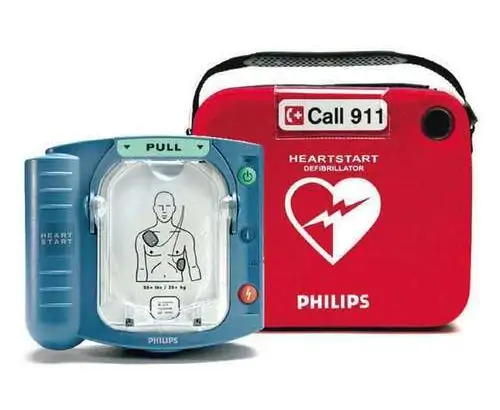
Buying an AED for home use makes sense for households managing a known cardiac risk — a family member with heart disease, a history of cardiac events, or simply the peace of mind that comes with having emergency equipment on hand before paramedics can arrive.
Here’s what actually matters when choosing one for a home setting specifically.
Who Should Consider an AED for Home Use
- Households with a family member diagnosed with heart disease or a history of cardiac arrhythmia
- Homes with elderly residents, where cardiac risk factors are statistically higher
- Families in areas with longer ambulance response times, where minutes before professional help arrives genuinely matter
- Anyone who wants baseline emergency preparedness alongside a first-aid kit, without needing medical training to use it
An AED for home use doesn’t require a prescription or medical training — both units we stock are designed with voice-guided prompts specifically so a family member with zero clinical background can operate them correctly during an actual emergency.
Best AED for Home Use — Our Recommendation
Philips HeartStart HS1 AED Defibrillator — ₹99,000
For a home setting specifically, the Philips HeartStart HS1 is our clear recommendation over the FRx. The FRx is built rugged for outdoor, industrial, or vehicle use — durability a home environment simply doesn’t need.
The HS1’s Ready-Pack configuration means it’s genuinely ready to use straight out of the box, with pads and battery pre-installed, so there’s no setup step standing between an emergency and using the device.
What to Expect on the Cost Side
Beyond the ₹99,000 upfront cost, budget for periodic pad and battery replacement over the device’s lifetime — this is standard for any AED regardless of brand, since pads and batteries have fixed expiration dates for safety reasons.
A wall-mounted AED cabinet is optional for a private home but worth considering if you want the unit visibly accessible and protected from accidental knocks.
Where to Keep an AED at Home
Store the unit somewhere accessible to every family member, not locked away or buried in a closet — a hallway, kitchen, or bedroom shelf that anyone in the house can reach quickly. Avoid extreme temperature locations like an unconditioned garage or attic, since battery and pad performance can degrade outside the manufacturer’s recommended storage range.
Make sure every adult in the household knows where it’s kept and has at least glanced through the basic operating steps once — the voice prompts guide you through use itself, but knowing the device exists and where to find it saves critical seconds.
Ongoing Readiness
The HS1 runs automatic self-checks — daily, weekly, and monthly — confirming the device is ready to fire if needed. Beyond these automated checks, plan for periodic pad and battery replacement before their expiration dates, and mark your calendar rather than relying on memory alone.
The World Health Organization’s data on cardiovascular disease underscores why home-level emergency preparedness for cardiac events is increasingly seen as a sensible precaution, not an overreaction.
Home AED vs Office/Public Installation
If you’re weighing options for a workplace or public space instead of a private home, the more rugged Philips HeartStart FRx or a wall-mounted AED cabinet may be more appropriate — see our full HS1 vs FRx comparison for that decision specifically.
Considering an AED for home use? WhatsApp our team and we’ll help you decide if it’s the right fit for your household.
Frequently Asked Questions
Do I need training or a prescription to buy an AED?
No — AEDs are designed for use by anyone regardless of medical training, and no prescription is required to purchase one for home, office, or public use in India.
How often do AED pads and batteries need replacing?
Pads and batteries have expiration dates, typically requiring replacement every few years depending on the model and usage — the HS1 and FRx both run automatic self-tests to alert you when replacement is due.
Which AED is better for a school or office — HS1 or FRx?
For a climate-controlled indoor space like a school or office, the HS1’s Ready-Pack configuration is a straightforward, reliable choice. The FRx is worth the extra cost mainly if the device may face rougher handling, dust, or moisture exposure.