
CPAP vs BiPAP: What’s the Difference?
July 20, 2026 2026-07-20 8:53 admin
admin CPAP vs BiPAP: What’s the Difference?
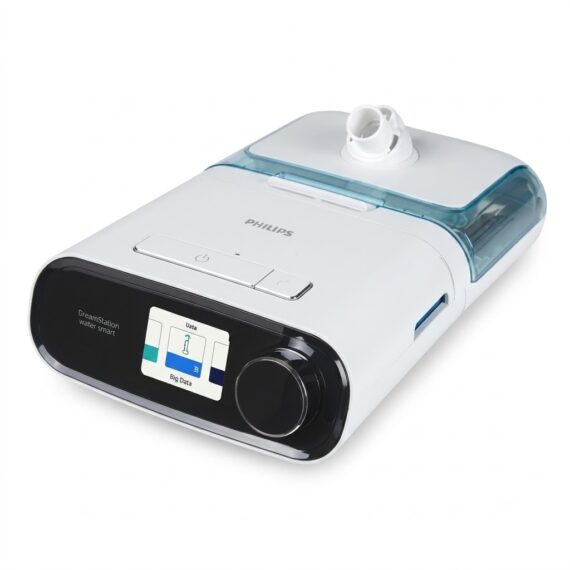
CPAP vs BiPAP is one of the first questions patients ask once they’re diagnosed with a breathing disorder that needs positive airway pressure therapy. It’s a natural question to have, since both device types look similar on the outside despite working quite differently internally.
Both machine types keep your airway open while you sleep, but they deliver pressure differently — and that difference determines which one your doctor is likely to prescribe.
CPAP vs BiPAP — The Core Difference
A CPAP machine delivers one constant pressure throughout your entire breathing cycle — the same pressure whether you’re inhaling or exhaling. This is the standard first-line therapy for most cases of obstructive sleep apnea.
A BiPAP (bilevel) machine delivers two different pressures — a higher pressure (IPAP) when you inhale, and a lower pressure (EPAP) when you exhale. This makes breathing feel more natural, and can be easier to tolerate for patients who find constant CPAP pressure uncomfortable on exhale.
CPAP vs BiPAP — Who Gets Prescribed Which
- CPAP is typically the first therapy prescribed for straightforward obstructive sleep apnea, since it’s simpler and generally more affordable
- BiPAP is usually prescribed when CPAP alone hasn’t worked, when pressure needs are very high, or for conditions beyond simple OSA — COPD overlap syndrome, central sleep apnea, neuromuscular weakness, and chronic respiratory failure all commonly call for bilevel support
Neither machine is “better” in a general sense — the right one depends entirely on your specific diagnosis and what your sleep physician has prescribed based on your sleep study results.
It’s also worth knowing that BiPAP isn’t simply “a stronger version of CPAP.” The two-pressure delivery mechanism serves a genuinely different clinical purpose — supporting exhalation, not just adjusting overall pressure intensity — which is why the two aren’t interchangeable based on preference alone.
CPAP vs BiPAP — Price Difference
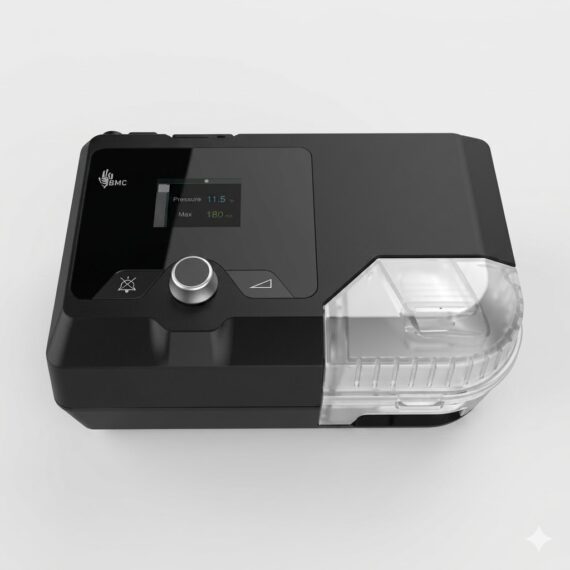
CPAP machines are generally less expensive than BiPAP machines for a comparable feature tier. In our current range, entry-level CPAP starts around ₹20,500 (BMC RESmart G2S A20), while entry-level BiPAP starts around ₹26,750 (BMC RESmart Y30T) — reflecting the more complex dual-pressure mechanism inside a BiPAP unit, which requires more sophisticated internal components to manage.
Can You Switch Between Them?
Not on your own. Moving from CPAP to BiPAP therapy requires a new prescription from your sleep physician, typically after a follow-up sleep study or a clinical reassessment showing standard CPAP isn’t managing your therapy effectively.
If you’re struggling with your current CPAP machine, the right first step is talking to your doctor about whether BiPAP might be a better fit — not switching independently.
For general medical background on both therapy types, see the National Heart, Lung, and Blood Institute’s overview of CPAP therapy.
CPAP vs BiPAP — Comfort and Adjustment Period
Many first-time CPAP users report the initial adjustment period as the hardest part of therapy — getting used to sleeping with a mask and constant airflow takes most patients a few weeks. BiPAP’s dual-pressure design is often specifically prescribed to ease this adjustment for patients who find a single constant pressure genuinely uncomfortable on exhale, rather than as a first-choice starting point.
Whichever machine you’re prescribed, sticking with therapy consistently matters more for long-term outcomes than which specific device you use — inconsistent use of either CPAP or BiPAP significantly reduces the therapy’s effectiveness, so working through the early adjustment period with your physician’s support is worth the effort.
Not sure which therapy your prescription calls for? WhatsApp our team your prescribed settings and we’ll help you find the right machine.
Is BiPAP always more effective than CPAP?
No — BiPAP isn’t a stronger version of CPAP, it serves a different clinical purpose. CPAP remains the standard first-line therapy for straightforward obstructive sleep apnea; BiPAP is prescribed for specific situations like CPAP intolerance or conditions beyond simple OSA.
Why is BiPAP more expensive than CPAP?
BiPAP machines use a more complex dual-pressure mechanism to deliver separate inhale and exhale pressures, which typically makes them more expensive than comparable CPAP models.
Can my doctor switch my prescription from CPAP to BiPAP?
Yes, if standard CPAP therapy isn’t managing your condition effectively — this typically follows a follow-up sleep study or clinical reassessment, not just personal preference.