
Philips vs Honeywell Air Purifier: The Best 2026 Guide
July 17, 2026 2026-07-17 9:08Philips vs Honeywell Air Purifier: The Best 2026 Guide
 admin
admin Philips vs Honeywell Air Purifier: The Best 2026 Guide
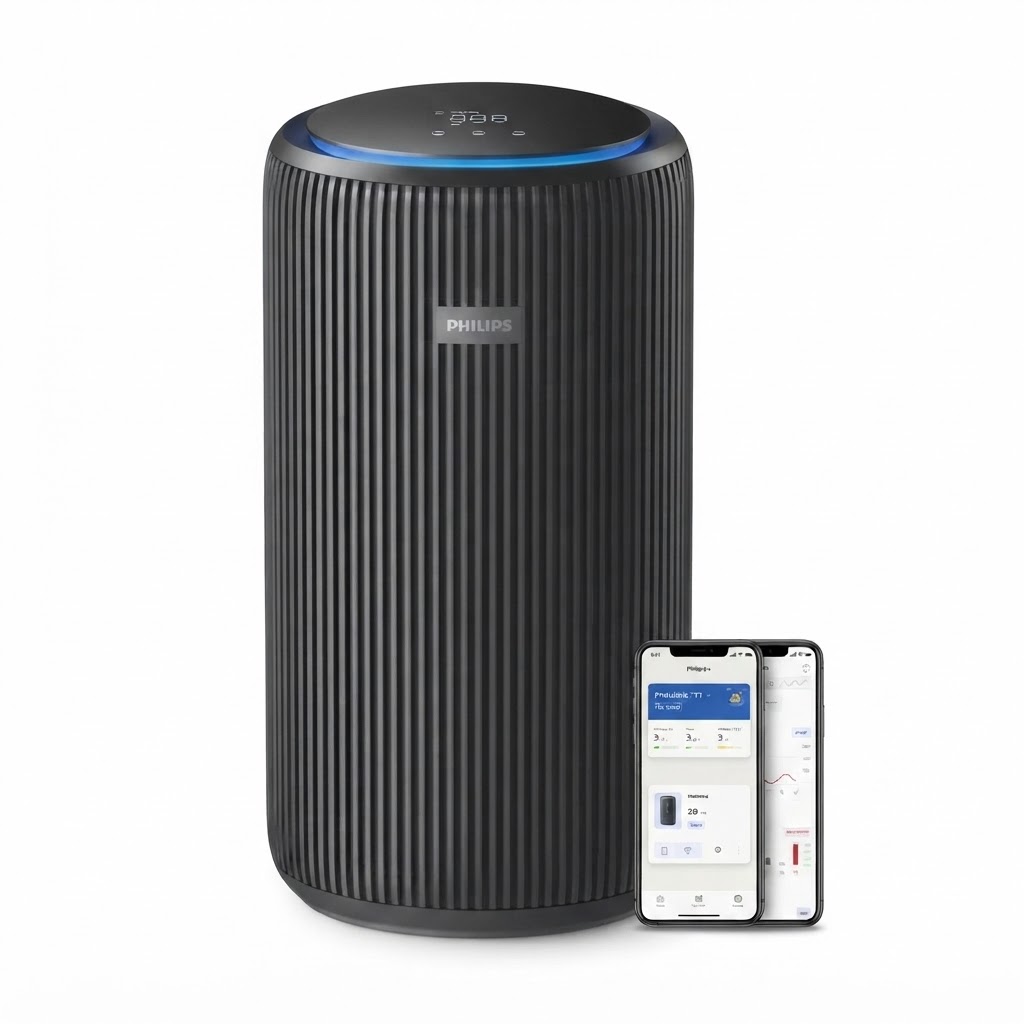
Choosing between a Philips vs Honeywell air purifier is one of the most common questions we get from customers, since both brands dominate the premium segment in India and both make genuinely good machines. The right answer usually comes down to a handful of practical differences — filtration technology, smart features, noise levels, and price positioning — rather than one brand being universally better. Here’s how they actually compare.
Philips vs Honeywell Air Purifier — Filtration Technology
Philips uses its NanoProtect HEPA system across most models, paired with an activated carbon layer and, on higher-end units, real-time PM2.5 and gas sensors that adjust fan speed automatically.
Honeywell typically runs a 3- or 4-stage filtration stack — sponge pre-filter, H13 HEPA, activated carbon, and on some models a Silver Ion Anti-H1N1 layer for additional germ reduction.
Both brands hit true H13 HEPA grade on their better models, so filtration performance is closely matched — the practical difference is Honeywell’s extra anti-bacterial layer versus Philips’ smarter sensing and auto-adjustment.
Philips vs Honeywell — Smart Features
Philips pulls ahead here for most buyers. Models like the AC0950 and AC4221/61 connect to the Philips Air+ app over WiFi, support Google Assistant and Alexa, and display real-time AQI numbers on the unit itself. Honeywell’s Air Touch series also offers WiFi and app control through the “Honeywell Air Touch” app, but the interface and sensor precision are generally considered a step behind Philips’ offering.
Philips vs Honeywell — Noise & Coverage
Philips models tend to run quieter at the low end — the AC0950’s sleep mode sits around 20.5 dB, and the AC4221/61 drops to 15 dB, both genuinely silent for a bedroom. Honeywell’s Air Touch V2 runs at 47.5 dB on high speed, which is more noticeable but still reasonable for a living room rather than a bedroom.
On coverage, Honeywell pulls ahead at the top end — the Air Touch U1 and U2 cover over 1,000 sq ft each (700 m³/h and 650 m³/h CADR respectively), more than any Philips model we stock. For anything smaller than a large open-plan living room, compare CADR and square footage rating directly rather than assuming one brand covers more space than the other by default.
Philips vs Honeywell — Price
Honeywell generally sits at a lower price point for comparable coverage — the Air Touch V2 (₹10,000) covers 388 sq ft with H13 HEPA and carbon filtration. Philips’ equivalent tier, the AC0950 (₹11,400), covers a smaller 300 sq ft but adds WiFi app control and a more advanced sensor. For larger rooms, Philips’ AC4221/61 (₹26,500, up to 72 m²/775 sq ft) and the newer Philips 2221 (₹19,000) both sit in the premium bracket.
Our Recommendation
If you’re still weighing a Philips vs Honeywell air purifier for your specific room, here’s how we’d break it down by use case:
- Best value for a bedroom: Honeywell Air Touch V2 — genuine H13 HEPA at the lowest price point in our range
- Best for smart home integration: Philips AC0950 — WiFi app control and real-time PM2.5 monitoring at a similar price
- Best for larger living rooms (mid-size): Philips AC4221/61 or the newer Philips 2221 — quietest sleep mode in our stock
- Best for maximum coverage (1,000+ sq ft): Honeywell Air Touch U1 or U2 — the highest CADR and largest coverage area of any purifier we stock, ahead of every Philips model in raw airflow
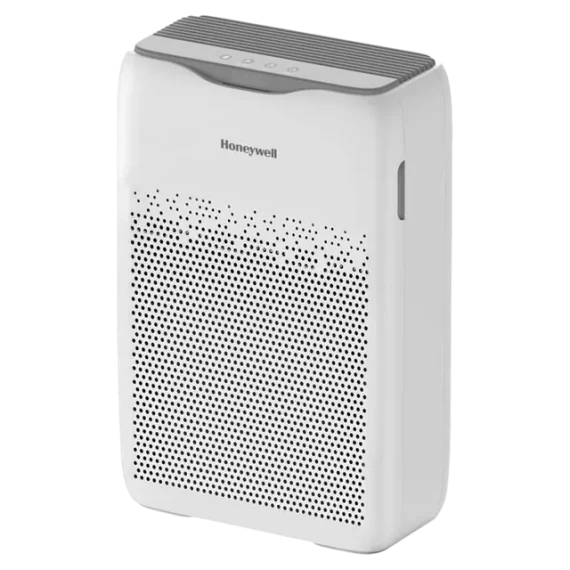
Honeywell Air Touch V2 Air Purifier — ₹10,000


Philips 2221 Portable Room Air Purifier — ₹19,000 (newer model)
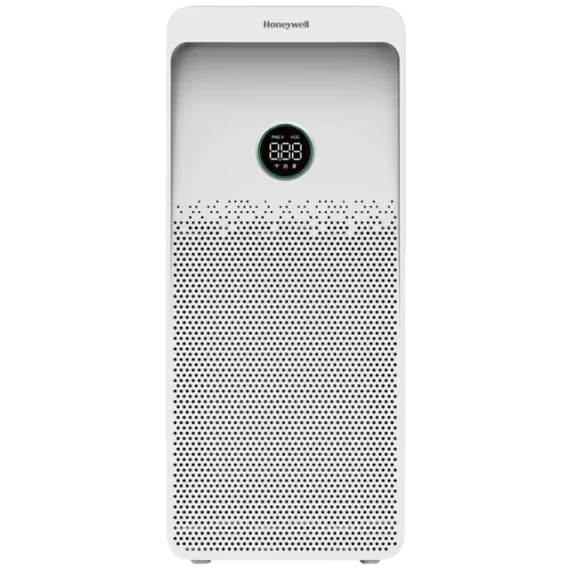
Honeywell Air Touch U1 Air Purifier — ₹23,999 (largest coverage)

Honeywell Air Touch U2 Air Purifier — ₹27,999
Frequently Asked Questions
Q: In the Philips vs Honeywell air purifier debate, which brand is better overall?
A: Neither wins outright — Philips generally offers better smart features and quieter operation, while Honeywell tends to offer strong HEPA filtration at a lower price. The right pick depends on your room size, budget, and whether app control matters to you.
Q: Are both brands genuine and authorised through BYM?
A: Yes — we’re an authorised dealer for both Philips and Honeywell, so every unit comes with full manufacturer warranty support, not a grey-market import.
Q: Can I mix brands across rooms in the same home?
A: Absolutely — many of our customers run a Honeywell unit in one room and a Philips unit in another based on that room’s specific needs, since there’s no compatibility issue between brands.
Still deciding between Philips and Honeywell for your space? WhatsApp our team your room size and budget, and we’ll recommend the right fit.