
The Ultimate HEPA Air Purifier Guide (2026)
July 17, 2026 2026-07-17 8:32 admin
admin The Ultimate HEPA Air Purifier Guide (2026)
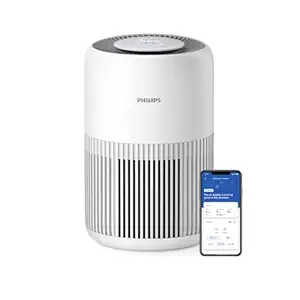
A HEPA air purifier is one of the few appliance categories where the spec sheet genuinely matters — not all “HEPA” filters perform the same, and the difference between H11 and H13 grades can mean the gap between filtering everyday dust and actually protecting against PM2.5 during a Delhi smog week. Marketing language on the box often blurs this distinction, which makes it easy to pay a premium for a purifier that doesn’t actually deliver medical-grade filtration. This guide breaks down what to check before you buy a HEPA air purifier for your home.
What Does HEPA Actually Mean?
HEPA stands for High-Efficiency Particulate Air filter. To be classified as true HEPA, a filter must capture at least 99.95% of particles at 0.3 microns in size — the hardest particle size to trap, since larger and smaller particles are both easier to filter. Any air purifier marketed as HEPA should meet this benchmark; if it doesn’t state a specific capture percentage, treat that as a red flag.
H11 vs H13 — Why the Grade Matters
- H11 HEPA: captures around 95% of particles at 0.3 microns — fine for general dust, less effective against fine PM2.5 smog
- H13 HEPA (medical-grade): captures 99.95%+ — the standard recommended for high-pollution cities and for households with allergy or respiratory sensitivity
Several of the HEPA air purifiers we stock use H13-grade filtration specifically for this reason — including models built with a genuine four-stage system rather than a single filter layer. A common mistake buyers make is assuming any purifier labeled “HEPA-type” or “HEPA-style” performs the same as certified HEPA — these terms aren’t regulated and often indicate a lower-grade filter that hasn’t been independently tested to the 99.95% benchmark. When comparing a HEPA air purifier on a spec sheet, look specifically for the grade (H11, H12, H13) rather than the word HEPA alone.
HEPA Alone Isn’t Enough — What Else to Check
- Activated carbon layer: HEPA filters particles, not gases or odours — you need carbon for smoke, VOCs, and cooking smells
- Pre-filter: catches larger debris first, extending your HEPA filter’s life
- CADR rating: tells you how fast the purifier actually cleans air in your room size — a high HEPA grade with low CADR still won’t clear a large room quickly, so always check CADR against your actual square footage rather than relying on filter grade alone
A purifier that scores well on all three — HEPA grade, carbon filtration, and CADR — is generally the safer long-term choice over one that only markets its HEPA rating and leaves the rest unspecified.
HEPA Air Purifiers We Stock
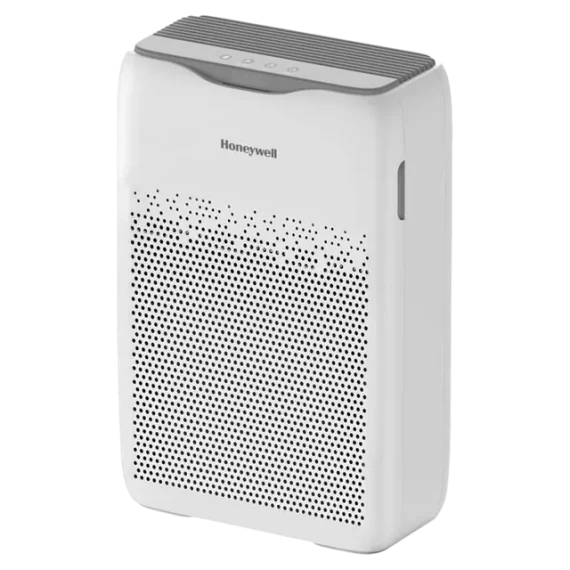


Philips 2221 Portable Room Air Purifier | Smart HEPA — ₹19,000 (newer model)
Frequently Asked Questions
Q: Is H13 HEPA worth the extra cost over H11?
A: For high-pollution cities like Delhi NCR, yes — the difference in fine particle capture is significant during severe AQI days, and a HEPA air purifier with H13-grade filtration handles that load more reliably.
Q: How do I know if a filter is genuinely HEPA-certified?
A: Check for a stated capture percentage at 0.3 microns (99.95%+ for true HEPA) — not just the word “HEPA” on the box, which isn’t independently regulated as a term on its own.
Q: How long does a HEPA filter last?
A: Typically 6–12 months in Indian conditions, depending on pollution exposure and usage hours. Homes running the purifier continuously during winter smog season, or households with pets, generally need replacements closer to the 6-month mark, while lighter year-round use can stretch closer to 12 months — check your model’s filter-life indicator if it has one rather than going by the calendar alone.
Not sure which HEPA air purifier fits your room size? WhatsApp our team and we’ll help you pick the right model.